Bed cooling systems, sleep trackers and bedroom gear, judged against the sleep research.
Overall evidence: Early10 products · 17 key studiesReviewed October 7, 2026Researched with AI assistance · Not reviewed by a clinician · Our method
The verdict
What we know about sleep technology
Temperature is one of the best-understood levers on sleep, which is why bed-cooling systems are a fast-growing category. Sleep trackers have also improved, but they are still estimates rather than medical tests. Here is what research says about cooling, trackers and common sleep gadgets, with prices on the systems we track.
Bottom line · Early
The best-supported sleep strategies are cheap: a cooler bedroom and a warm bath or shower 1–2 hours before bed both have supportive, if limited, evidence. Pricier gear is shakier: active bed-cooling covers have small, mixed and partly company-funded studies; consumer trackers tell sleep from wake fairly well but misjudge time awake and sleep stages; and blue-light glasses, mouth tape and white noise lack good-quality evidence. No consumer tracker can diagnose a sleep disorder.
Bed and bedroom temperature (cooling pads and covers)Early
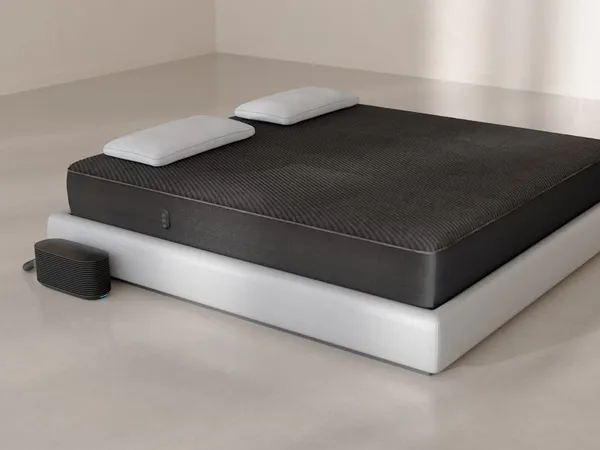
Warmer bedrooms are linked to worse sleep: in a home study of older adults, sleep was most efficient at roughly 20–25 °C (68–77 °F). Evidence for active cooling covers such as Eight Sleep and Sleepme is thin. A study funded and largely run by Eight Sleep reported more deep sleep in men and more REM sleep in women; an independent crossover trial found people felt they slept better but measured sleep did not change; and a 2025 meta-analysis of cooling bedding found no differences in sleep measures.
Warm bath or shower before bedModerate
A 2019 meta-analysis linked warm-water bathing (about 40–42.5 °C / 104–108.5 °F) 1–2 hours before bedtime to better self-rated sleep quality and sleep efficiency, and to falling asleep faster, even with sessions as short as about 10 minutes. The proposed mechanism is that it helps the body shed heat before sleep. The studies were few and small, so the size of the benefit is uncertain.
Sleep trackers vs. polysomnography (lab sleep studies)Moderate
Rings, watches and bedside devices are good at detecting sleep (sensitivity of 93% or more in a seven-device lab study) but weaker at detecting time awake and at classifying sleep stages. A 2025 meta-analysis of six Oura studies found no significant average differences from lab or actigraphy measures, but averages can hide large errors on individual nights, and accuracy looks worse in older adults and on nights of disrupted sleep.
Orthosomnia (tracker-driven sleep worry)Early
Sleep clinicians coined 'orthosomnia' in 2017 for patients whose pursuit of perfect tracker data fed their insomnia. In a randomized experiment, people with insomnia who were given fake 'poor sleep' feedback reported feeling less alert and more tired than those told they slept well, which suggests the score itself can shape how you feel.
Blue-light-blocking glassesWeak
A 2023 Cochrane review of 17 randomized trials judged the effect on sleep indeterminate: of six small trials that measured sleep, three found an improvement and three found no difference, and the certainty of the evidence was very low.
Mouth tapingWeak
A 2025 systematic review found only 10 small studies (213 patients). Two reported better sleep-apnea measures, the rest showed no difference, and the authors warned of potentially serious harm, including suffocation risk, if the nose is blocked.
White noiseWeak
A 2021 systematic review of 38 studies rated the evidence that continuous noise improves sleep as very low quality. Results ranged from better to worse sleep, and the reviewers noted possible effects on hearing.
Evidence
What the research shows
Moderate
A warm bath or shower 1–2 hours before bed is linked to falling asleep faster and to better self-rated sleep.1Pooled from 13 studies with comparable data; most were small, and the best timing, duration and water temperature are not pinned down.
Early
Cooler bedrooms are associated with more efficient sleep in older adults; sleep efficiency fell 5–10% as nighttime room temperature rose from 25 to 30 °C (77 to 86 °F).2Observational home study of older adults; individuals differed substantially, so there is no single ideal temperature.
Early
Active temperature-controlled mattress covers have not consistently improved objectively measured sleep.345The positive objective results come from a study funded by Eight Sleep in which most authors were employees or paid consultants. The independent trial found only subjective benefits, which its authors said may partly reflect expectation (placebo) effects.
Early
In a small pilot study, menopausal women using a cooling mattress pad reported about half as many hot flashes and better sleep-quality scores after 8 weeks.6Single-arm study of 15 women with no comparison group; the maker (Sleepme) gave devices and an unrestricted gift to the research center.
Moderate
Consumer sleep trackers detect sleep well but often miss periods of wakefulness and classify sleep stages less reliably.789Results depend on the device and software version; several validation studies involve company funding or company-affiliated authors, and performance tends to be worse on nights of poor sleep.
Early
Tracker errors may be larger in older adults, including underestimating total sleep by more than an hour on average for some devices.10Single night of recordings in 32 people (19 older adults).
Early
Being told you slept badly can make you feel worse the next day, regardless of how you actually slept.1112One randomized experiment in 63 people with insomnia using fake feedback from a research watch; how this applies to good sleepers using commercial apps is unknown.
Weak
Blue-light-filtering glasses have not been shown to reliably improve sleep.13Trials were small, short and in mixed populations; adverse effects such as headache, discomfort and lower mood were reported infrequently.
Weak
Mouth taping has little evidence of benefit and may be risky when nasal breathing is obstructed.14Only 10 small studies; many excluded people with nasal obstruction, which limits what is known about safety.
Weak
Evidence that continuous white noise improves sleep is very low quality.15Studies varied widely in noise type, volume, adherence and how sleep was measured.
Strong
Consumer sleep technology cannot diagnose sleep disorders such as sleep apnea; diagnosis requires a sleep study as part of a clinical evaluation.1617Some watches now have FDA-cleared sleep apnea notification features, but these are screening aids rather than diagnoses.
Key studies
The studies behind the ratings
Summaries are our own, from each study's published abstract. Follow the links for the full details.
Systematic review and meta-analysis · 2019
Before-bedtime passive body heating by warm shower or bath to improve sleep: A systematic review and meta-analysis
Who:
17 studies met inclusion criteria; 13 provided comparable data for meta-analysis
What:
Warm shower or bath before bedtime (passive body heating)
Found:
Water of 40–42.5 °C was associated with better self-rated sleep quality and sleep efficiency; when scheduled 1–2 h before bedtime, sessions as short as 10 min significantly shortened the time taken to fall asleep.
Limits:
Few, mostly small studies; optimal timing, duration and mechanism still uncertain.
Nighttime ambient temperature and sleep in community-dwelling older adults
Who:
Community-dwelling older adults monitored in their own homes
What:
Measured nighttime bedroom temperature; sleep tracked with wearable sleep monitors
Found:
Sleep was most efficient and restful at nighttime temperatures of 20–25 °C, with a 5–10% drop in sleep efficiency as temperature rose from 25 to 30 °C; associations were nonlinear with substantial between-person variation.
Limits:
Observational; older adults only; sleep measured by wearables rather than polysomnography.
Free-living within-subject comparison (device on vs. off) · 2024
Sleeping for One Week on a Temperature-Controlled Mattress Cover Improves Sleep and Cardiovascular Recovery
Who:
54 adults; 4 nights each with and without active temperature control (>300 home sleep test nights)
What:
Eight Sleep Pod temperature-controlled mattress cover
Found:
With cooler temperatures in the first half of the night, men gained deep sleep (+14 min; +22%) and women gained REM sleep (+9 min; +25%); men sleeping warmer in the second half gained light sleep (+23 min). Sleeping heart rate fell 2% and HRV rose 7% with the cover on.
Limits:
Funded by Eight Sleep; most authors were employees or shareholders and others paid consultants; short exposure; not blinded.
Under the Covers: The Effect of a Temperature-Controlled Mattress Cover on Sleep and Perceptual Measures in Healthy Adults
Who:
34 healthy adults (20 women, 14 men), mean age 30
What:
Temperature-controlled mattress cover (Eight Sleep Pod) with temperature feature on for 7 nights vs. off for 7 nights
Found:
Perceived sleep quality improved substantially with the feature on (d = 0.92), but actigraphy sleep measures and heart rate, HRV and breathing rate showed no significant differences.
Limits:
Short duration; actigraphy rather than polysomnography; participants could not be blinded, so expectation effects are possible. Funded by a university internal grant; authors declared no conflicts.
Systematic review and meta-analysis of randomized trials · 2025
Does body cooling facilitated by bedding compared to control condition improve sleep among adults (18-64 years old)? A systematic review and meta-analysis
Who:
9 studies of healthy adults aged 18–64
What:
Bedding designed to cool the body (mattresses, toppers, pillows) vs. usual bedding
Found:
No differences in time to fall asleep, sleep efficiency, sleep stages, wake after sleep onset or total sleep time, although bedding lowered core body temperature acutely.
Limits:
Very low to low certainty of evidence; high heterogeneity; mostly passive bedding rather than active cooling systems.
Results of a pilot study of a cooling mattress pad to reduce vasomotor symptoms and improve sleep
Who:
15 perimenopausal and postmenopausal women aged 45–59 with 4 or more hot flashes or night sweats per day
What:
Water-based cooling mattress pad system (ChiliPad) used nightly for 8 weeks
Found:
Hot flash/night sweat frequency fell 52% at 8 weeks; Pittsburgh Sleep Quality Index improved from 11.14 to 7.87; hot flash interference score fell from 4.16 to 1.92.
Limits:
No control group; very small; manufacturer (Sleepme) donated devices and an unrestricted gift to the research center.
Laboratory validation study vs. polysomnography · 2021
Performance of seven consumer sleep-tracking devices compared with polysomnography
Who:
34 healthy young adults over 3 nights, including a disrupted-sleep night
What:
Four wearables (Fatigue Science Readiband, Fitbit Alta HR, Garmin Fenix 5S, Garmin Vivosmart 3) and three bedside devices, plus research actigraphy
Found:
Sensitivity for sleep was high (all ≥0.93) but specificity for wake was low to medium (0.18–0.54); most devices matched or beat actigraphy, Garmin devices performed worse, sleep-stage results were mixed, and performance dropped on disrupted nights.
Limits:
Healthy young adults in a lab; device models tested are now older.
Prospective multicenter validation study vs. polysomnography · 2023
Accuracy of 11 Wearable, Nearable, and Airable Consumer Sleep Trackers: Prospective Multicenter Validation Study
Who:
75 participants at a tertiary hospital and a sleep clinic in Korea
What:
11 consumer sleep trackers, including Google Pixel Watch, Galaxy Watch 5, Fitbit Sense 2, Apple Watch 8, Oura Ring 3 and bedside/phone-based trackers
Found:
Sleep-stage agreement varied widely (macro F1 score 0.26 to 0.69); wearables showed high proportional bias in sleep efficiency, and performance varied with BMI, sleep efficiency and sleep apnea severity.
Limits:
Several authors were affiliated with, or held stock in, the company behind one of the tested apps; clinical population; single-country sample.
The Oura Ring Versus Medical-Grade Sleep Studies: A Systematic Review and Meta-Analysis
Who:
6 studies (388 participants) comparing Oura ring with polysomnography or actigraphy
What:
Oura ring sleep estimates
Found:
No statistically significant mean differences for total sleep time (−2.97 min), sleep efficiency (−1.32%), wake after sleep onset, sleep onset latency, light, deep or REM sleep time.
Limits:
Few studies; confidence intervals for stage times were wide (e.g., light sleep −24.68 to +16.13 min); averages do not show night-to-night individual error.
Performance evaluation of consumer sleep-tracking wearables and nearables in healthy young and older adults
Who:
32 healthy adults: 13 aged 19–24 and 19 aged 56–80; one night each
What:
Fitbit Sense 2, Oura Ring, Withings Sleep Mat and SleepScore Max
Found:
In older adults, devices underestimated total sleep time (e.g., Fitbit −74.5 min, Oura −75.5 min) and most overestimated deep sleep (e.g., Oura +71.5 min, Withings +97.4 min); limits of agreement were wider in older than younger adults.
Sham sleep feedback delivered via actigraphy biases daytime symptom reports in people with insomnia: Implications for insomnia disorder and wearable devices
Who:
63 adults meeting criteria for insomnia disorder
What:
Next-morning sham (fake) 'positive' vs. 'negative' sleep-quality feedback delivered by an actigraphy watch
Found:
The negative-feedback group reported lower alertness (d = 0.79) and more sleepiness/fatigue (d = 0.55) by evening than the positive-feedback group; attention bias and reaction-time tests did not differ.
Limits:
People with insomnia only; single-day manipulation; research device rather than a commercial app.
Orthosomnia: Are Some Patients Taking the Quantified Self Too Far?
Who:
Patients seen at a sleep clinic who brought sleep-tracker data
What:
Use of consumer sleep trackers
Found:
Described 'orthosomnia': patients self-diagnosing sleep problems from tracker data and pursuing perfect sleep metrics in ways that reinforced insomnia.
Cochrane systematic review of randomized controlled trials · 2023
Blue-light filtering spectacle lenses for visual performance, sleep, and macular health in adults
Who:
17 RCTs (5 to 156 participants each) in adults, from healthy people to those with mental health and sleep disorders
What:
Blue-light-filtering spectacle lenses vs. non-filtering lenses
Found:
No meta-analysis was possible; effects on sleep were indeterminate (very low certainty), with 3 of 6 trials (148 participants total) reporting better sleep scores and 3 finding no difference. Probably little or no effect on visual acuity.
Limits:
Small, short trials (under 1 day to 5 weeks of follow-up); none was at low risk of bias in all domains, and many were unblinded.
Breaking social media fads and uncovering the safety and efficacy of mouth taping in patients with mouth breathing, sleep disordered breathing, or obstructive sleep apnea: A systematic review
Who:
10 studies, 213 patients with mouth breathing, sleep-disordered breathing or obstructive sleep apnea
What:
Mouth taping or oral patches during sleep
Found:
Two studies showed significant improvement in apnea-hypopnea index or oxygen desaturations; other studies found no difference, and potential risks including asphyxiation with nasal obstruction were discussed.
Limits:
Small, heterogeneous studies; many excluded people with nasal obstruction.
Consumer Sleep Technology: An American Academy of Sleep Medicine Position Statement
Who:
Not applicable (American Academy of Sleep Medicine guidance for clinicians)
What:
Consumer sleep technologies (apps and devices)
Found:
Because of lack of validation and FDA clearance, consumer sleep technologies cannot be used to diagnose or treat sleep disorders, though they may help patient–clinician conversations.
Limits:
Published in 2018; some devices have since gained FDA clearance for specific notification features.
Clinical Practice Guideline for Diagnostic Testing for Adult Obstructive Sleep Apnea: An American Academy of Sleep Medicine Clinical Practice Guideline
Who:
Adults being evaluated for obstructive sleep apnea
What:
Diagnostic testing approaches
Found:
Recommends polysomnography or a technically adequate home sleep apnea test for diagnosis, and recommends against using questionnaires, clinical tools or prediction algorithms to diagnose sleep apnea without such testing.
Limits:
Predates FDA-cleared wearable apnea notification features (2024).
Sleep trackers are not diagnostic. Obstructive sleep apnea is diagnosed with an in-lab sleep study (polysomnography) or a home sleep apnea test as part of a clinical evaluation; questionnaires and apps alone should not be used to diagnose it.1617
Symptoms that suggest sleep apnea, such as loud snoring, breathing pauses noticed by a bed partner, or heavy daytime sleepiness, call for a medical evaluation rather than self-treatment with gadgets or mouth tape.1417
No alert does not mean no apnea: in Apple's FDA submission, its sleep apnea notification flagged 66.3% of people with moderate-to-severe sleep apnea, so about a third were not notified.18
Mouth taping may be dangerous for people whose nose is blocked; reviewers raised a risk of suffocation.14
Continuous noise played all night may disturb sleep for some people and could affect hearing.15
Fixating on nightly sleep scores can backfire: negative feedback alone made people with insomnia feel less alert and more tired the next day.1112
This is general information, not medical advice. If you have a heart condition, are pregnant, take medication or have any health concern, ask a clinician first.
Buying guide
Specs that actually matter
Independent validation against polysomnography for the exact model and software version
Accuracy differs between devices and algorithm updates and is weakest for time awake and sleep stages.7
Realistic expectations for sleep-stage numbers (deep and REM minutes)
Stage estimates are the least reliable output; in older adults, several devices misjudged deep sleep by more than an hour.10
Adjustable temperature range and separate zones for couples (cooling covers and pads)
The temperature associated with the best sleep varied substantially from person to person in a home study.2
Home trial period or generous return window (cooling systems)
Independent evidence shows mainly subjective benefits, so whether a pricey system helps you is best judged in your own bed.
Total cost of ownership: subscriptions, replacement parts, water refills
Some sleep devices put features behind subscriptions or need ongoing maintenance, so the sticker price understates cost.
Noise of pumps, fans or hubs
A device meant to improve sleep should not add disruptive sound to the bedroom.
Sleep claims on blue-light-filtering lenses
Not backed by good evidence; a Cochrane review judged the effect on sleep indeterminate.13
Volume control and auto-off timer (white noise machines)
Reviewers cautioned that continuous noise may disturb sleep and affect hearing.15
Compare prices
Sleep technology: current prices
How we make money: some shop links are affiliate links, so ThriveRadar may earn a commission if you buy, at no extra cost to you. It never changes our evidence ratings. Prices are checked daily, not live; confirm the final price at the shop. Learn more.
Long-form interviews and explainers from researchers and clinicians. Their views are their own; check claims against the studies above.
Using Light (Sunlight, Blue Light & Red Light) to Optimize Health
Andrew Huberman
Huberman explains how different wavelengths affect sleep, alertness, mood and hormones, and discusses UV and red/near-infrared phototherapies for skin, pain and age-related vision decline.
The Science & Practice of Perfecting Your Sleep | Dr. Matt Walker
Andrew Huberman
UC Berkeley sleep scientist Matt Walker covers sleep stages, what happens when sleep is cut short, and how morning light, caffeine, alcohol, naps and common sleep supplements affect sleep.
#47–Matt Walker, Ph.D. on Sleep (Part 1 of 3): Dangers of poor sleep, dementia risk, mental health..
Peter Attia MD
Part 1 of Peter Attia's three-part series with Matt Walker: sleep stages and cycles, memory consolidation, mental health, and links between poor sleep and Alzheimer's risk.
Cognitive Behavioral Therapy for Insomnia in Day-To-Day Practice: S2-Ep3
Mayo Clinic
Mayo Clinic's Mark Hansen explains the components of cognitive behavioral therapy for insomnia (stimulus control, sleep restriction, relaxation) and whether internet-delivered CBT-I works.
Public seminar in which Harvard Medical School sleep experts explain how much sleep people need, why it matters for health, and the short- and long-term costs of skimping on it.
Rhonda Patrick explains how passive heating (sauna, hot baths) and vigorous exercise may deepen slow-wave sleep, including the roles of thermoregulation and immune signalling molecules.
Matt Walker explains why morning outdoor light anchors the circadian clock and why evening room lighting, more than phone screens, can suppress melatonin, with a no-cost light routine.
UCSF psychologist Ashley Mason gives a practical walkthrough of CBT-I (time-in-bed restriction, stimulus control, cognitive restructuring), sleep diaries, and how temperature and light affect sleep.
Sleep researcher Michael Grandner covers CBT-I, spotting undiagnosed sleep apnea, and how the timing of light, caffeine and melatonin affects sleep quality.
Timothy Morgenthaler, director of Mayo Clinic's Center for Sleep Medicine, discusses consistent sleep schedules, optimizing the sleep environment and when to see a doctor.
Latest research
New studies and news
Collected automatically from PubMed, safety recalls and science news. Not yet reviewed by us; inclusion is not an endorsement.
Do cooling mattress covers like Eight Sleep or Sleepme actually improve sleep?
They may make sleep feel more comfortable, but measurable sleep benefits are not established. A study funded by Eight Sleep reported more deep sleep in men and more REM sleep in women, while an independent crossover trial found people felt they slept better without changes in measured sleep or heart metrics. A 2025 meta-analysis of cooling bedding found no differences in sleep measures.345
What bedroom temperature is best for sleep?
There is no single number. In a home study of older adults, sleep was most efficient when nighttime bedroom temperatures were about 20–25 °C (68–77 °F), and efficiency dropped 5–10% as rooms warmed from 25 to 30 °C (77 to 86 °F). People varied a lot, so that range is a starting point rather than a rule.2
Does a warm shower or bath before bed help?
Probably a little. A meta-analysis found that warm baths or showers of about 40–42.5 °C (104–108.5 °F), taken 1–2 hours before bed, were linked to better self-rated sleep and falling asleep faster, even when they lasted only about 10 minutes. The research base is small, so the size of the effect is uncertain.1
How accurate are Oura, Apple Watch and Fitbit at measuring sleep?
They are reasonably good at telling sleep from wake on average but weaker at spotting time awake and at sorting sleep stages. In one lab study of seven devices, sensitivity for sleep was at least 93% while specificity for wake ranged from 18% to 54%. A 2025 meta-analysis found Oura's averages close to lab measures, but errors can be much larger for individual nights and in older adults.78910
Can my watch or ring tell me whether I have sleep apnea?
No consumer device can diagnose sleep apnea. Some watches have FDA-cleared notification features, but these are screening aids: Apple's feature flagged 66.3% of people with moderate-to-severe sleep apnea in its validation study. Diagnosis requires a sleep study ordered as part of a clinical evaluation.1718
What is orthosomnia?
It is a term sleep clinicians coined in 2017 for an unhealthy preoccupation with getting 'perfect' sleep-tracker data, which can worsen insomnia. In an experiment, people with insomnia who were told they had slept poorly felt less alert and more tired the next day, even though the feedback was fake.1112
Do blue-light-blocking glasses help you sleep?
The best available evidence can't say. A 2023 Cochrane review found mixed results across six small trials that measured sleep, three positive and three showing no difference, and rated the certainty of evidence as very low.13
Is mouth taping safe?
It is not well studied. A 2025 systematic review found only 10 small studies; most showed no benefit, and the authors warned of potentially serious harm, including suffocation risk, for people with a blocked nose. Snoring or suspected sleep apnea warrants a medical evaluation.1417
Do white noise machines improve sleep?
The evidence is very low quality. A 2021 systematic review of 38 studies found results ranging from better to worse sleep, and the reviewers cautioned that continuous noise could also affect hearing.15
Sources
References
FDA cleared Apple's Sleep Apnea Notification Feature (510(k) K240929) on September 13, 2024, classified as an over-the-counter device to assess risk of sleep apnea. 19
Per the 510(k) summary, the feature is for adults 18 and over without a prior sleep apnea diagnosis; it is not intended to diagnose, treat or aid in managing sleep apnea, and the absence of a notification does not indicate the absence of sleep apnea. In the validation study, sensitivity for moderate-to-severe sleep apnea was 66.3% and specificity was 98.5%. 18
FDA's General Wellness guidance (revised January 6, 2026) treats low-risk products intended only for general wellness, such as tracking sleep patterns to promote healthy sleep habits, as outside medical-device regulation. In practice, wellness sleep scores are generally not reviewed by FDA for accuracy. 20
Before-bedtime passive body heating by warm shower or bath to improve sleep: A systematic review and meta-analysis. Sleep Med Rev 2019.PubMed 31102877
Nighttime ambient temperature and sleep in community-dwelling older adults. Sci Total Environ 2023.PubMed 37474050
Sleeping for One Week on a Temperature-Controlled Mattress Cover Improves Sleep and Cardiovascular Recovery. Bioengineering (Basel) 2024.PubMed 38671774
Under the Covers: The Effect of a Temperature-Controlled Mattress Cover on Sleep and Perceptual Measures in Healthy Adults. Clocks Sleep 2025.PubMed 41133665
Does body cooling facilitated by bedding compared to control condition improve sleep among adults (18-64 years old)? A systematic review and meta-analysis. J Therm Biol 2025.PubMed 39708549
Results of a pilot study of a cooling mattress pad to reduce vasomotor symptoms and improve sleep. Menopause 2022.PubMed 35881974
Performance of seven consumer sleep-tracking devices compared with polysomnography. Sleep 2021.PubMed 33378539
Accuracy of 11 Wearable, Nearable, and Airable Consumer Sleep Trackers: Prospective Multicenter Validation Study. JMIR Mhealth Uhealth 2023.PubMed 37917155
The Oura Ring Versus Medical-Grade Sleep Studies: A Systematic Review and Meta-Analysis. OTO Open 2025.PubMed 41230431
Performance evaluation of consumer sleep-tracking wearables and nearables in healthy young and older adults. Sleep Adv 2026.PubMed 41768372
Sham sleep feedback delivered via actigraphy biases daytime symptom reports in people with insomnia: Implications for insomnia disorder and wearable devices. J Sleep Res 2018.PubMed 29989248
Orthosomnia: Are Some Patients Taking the Quantified Self Too Far?. J Clin Sleep Med 2017.PubMed 27855740
Blue-light filtering spectacle lenses for visual performance, sleep, and macular health in adults. Cochrane Database Syst Rev 2023.PubMed 37593770
Breaking social media fads and uncovering the safety and efficacy of mouth taping in patients with mouth breathing, sleep disordered breathing, or obstructive sleep apnea: A systematic review. PLoS One 2025.PubMed 40397877
Noise as a sleep aid: A systematic review. Sleep Med Rev 2021.PubMed 33007706
Consumer Sleep Technology: An American Academy of Sleep Medicine Position Statement. J Clin Sleep Med 2018.PubMed 29734997
Clinical Practice Guideline for Diagnostic Testing for Adult Obstructive Sleep Apnea: An American Academy of Sleep Medicine Clinical Practice Guideline. J Clin Sleep Med 2017.PubMed 28162150
Per the 510(k) summary, the feature is for adults 18 and over without a prior sleep apnea diagnosis; it is not intended to diagnose, treat or aid in managing sleep apnea, and the absence of a notification does not indicate the absence of sleep apnea. accessdata.fda.gov
FDA cleared Apple's Sleep Apnea Notification Feature (510(k) K240929) on September 13, 2024, classified as an over-the-counter device to assess risk of sleep apnea. accessdata.fda.gov
FDA's General Wellness guidance (revised January 6, 2026) treats low-risk products intended only for general wellness, such as tracking sleep patterns to promote healthy sleep habits, as outside medical-device regulation. fda.gov
The ThriveRadar Weekly
New research, recalls and price drops, once a week.
Plain-English summaries of new studies on heat, cold, light, sleep and more, plus notable price changes from the shops we track. No hype. Unsubscribe anytime.