Cold plunges, ice baths and chillers: what cold water does and does not do, and how to choose a tub.
Overall evidence: Early18 products · 25 key studiesReviewed October 7, 2026Researched with AI assistance · Not reviewed by a clinician · Our method
The verdict
What we know about cold plunges & cold exposure
Cold-water immersion is popular with athletes and biohackers alike. Research supports some effects, like feeling less sore after hard exercise, and shows trade-offs, like smaller strength gains when you plunge right after lifting. Cold shock is also a real safety risk. Here is the evidence, the safety basics and a price comparison of home plunges.
Bottom line · Early
Cold-water immersion after hard exercise modestly eases next-day soreness across many small trials, and that is its best-supported benefit. Popular claims about mood, immunity, fat loss and 'dopamine boosts' rest on small or short-term studies, and regular plunging right after strength training can blunt muscle growth. Sudden cold immersion also carries real risks—cold shock, heart-rhythm disturbances and drowning—especially for people with heart disease or anyone plunging alone.
Post-exercise recovery (soreness)Moderate
Dozens of small trials, pooled in a Cochrane review and later meta-analyses, show cold-water immersion modestly reduces soreness and helps muscular power recover over one to four days. In pooled analyses, immersions of about 10–15 minutes in water around 10–15 °C gave the best soreness results; overall study quality is low, and recovery of strength isn't consistently helped.
Muscle growth after strength trainingModerate
Training studies and meta-analyses find that regular cold-water immersion right after resistance sessions reduces gains in muscle size and, in some analyses, strength. Endurance-training adaptations don't appear to suffer.
Mood, stress and mental healthEarly
Many people report feeling alert and upbeat after a cold dip, and a small brain-imaging study found more positive mood after five minutes at about 20 °C. But a 2026 meta-analysis concluded the evidence does not establish benefits for mood, depression or stress, largely because most studies are at high risk of bias.
Immunity and sick days (cold showers)Early
A Dutch trial of 3,018 adults found that ending daily showers with 30–90 seconds of cold cut self-reported sickness absence from work by 29%, though the number of days people felt ill didn't change. Other immune findings come from small studies.
Brown fat, metabolism and weightEarly
Repeated mild cold exposure (for example, 2 hours a day at 17 °C for six weeks) activates brown fat and modestly raises heat production in small studies, and one 10-day study improved insulin sensitivity in eight people with type 2 diabetes. That is a very different exposure from short plunges, and a review found these effects haven't translated into meaningful weight loss.
Whole-body cryotherapy chambersWeak
A Cochrane review found too little evidence (four small, very-low-quality trials) to say these below −100 °C cold-air chambers reduce soreness. FDA has said no whole-body cryotherapy device is cleared or approved to treat medical conditions and warned of asphyxiation, frostbite, burns and eye injury.
Evidence
What the research shows
Moderate
Cold-water immersion after strenuous exercise reduces muscle soreness over the following one to four days compared with resting.1234Many small, low-quality trials, mostly in young active men; effects are modest, and harms were rarely tracked.
Weak
Cold-water immersion speeds recovery of muscle strength.24Meta-analyses found benefits for power and soreness but not for recovery of strength performance.
Moderate
Regular cold-water immersion right after resistance training reduces muscle growth and may reduce strength gains.45678Studies tested immersion within minutes after lifting; effects on muscle size are more consistent than on strength, and one meta-analysis found no significant strength effect when the whole body was immersed.
Weak
Cold-water immersion after endurance training interferes with endurance gains.7A meta-analysis found no effect on endurance performance gains, though few studies exist.
Early
Cold water triggers a large rise in blood noradrenaline (norepinephrine) and dopamine.9From one small study of a full hour at 14 °C; levels were measured in blood, not the brain, and typical plunges are far shorter.
Early
Ending showers with cold water reduces sickness absence from work.10One large but unblinded trial with self-reported outcomes; the number of illness days did not fall.
Early
Cold-water immersion improves mood or reduces depression.111213Short-term mood lifts are often reported, but meta-analyses found no consistent mood effect and mostly high-risk-of-bias studies.
Early
Cold-water immersion lowers stress later in the day.12Lower stress appeared 12 hours after exposure but not at other time points.
Early
Repeated cold exposure activates brown fat and raises energy expenditure.141516Shown with hours of mild cold daily in small studies; meaningful weight loss has not been shown.
Early
Cold acclimation can improve insulin sensitivity in type 2 diabetes.17Eight participants, 10 days of mild cold surroundings, no control group.
Weak
Whole-body cryotherapy chambers reduce post-exercise soreness.18Four small trials with very-low-quality evidence; at most time points the confidence intervals included no effect.
Early
Breathing techniques combined with cold training can dampen the body's inflammatory response.19A 24-person trial of a combined program (meditation, breathing and cold), tested with injected bacterial endotoxin; cold's own contribution is unknown.
Moderate
Repeated cold immersions blunt the cold-shock response.20Habituation appeared after about four immersions and varied between people; the authors describe it as potentially, not completely, reducing drowning risk.
Early
After cold exposure, heart-rate variability shifts toward 'rest-and-digest' (parasympathetic) activity.21Measured for up to 15 minutes afterward; long-term meaning is unclear, and mean blood pressure rose slightly.
Key studies
The studies behind the ratings
Summaries are our own, from each study's published abstract. Follow the links for the full details.
Cochrane systematic review with meta-analysis of 17 small trials · 2012
Cold-water immersion (cryotherapy) for preventing and treating muscle soreness after exercise
Who:
366 participants, mostly physically active young adults
What:
Cold-water immersion below 15 °C after exercise vs rest or other recovery methods
Found:
Compared with rest, soreness was lower at 24 hours (SMD −0.55), 48 hours (−0.66), 72 hours (−0.93) and 96 hours (−0.58); no clear difference vs contrast or warm-water immersion.
Limits:
Low-quality, heterogeneous trials; most didn't actively monitor adverse events.
Systematic review with meta-analysis and meta-regression of 52 studies · 2022
Impact of Cold-Water Immersion Compared with Passive Recovery Following a Single Bout of Strenuous Exercise on Athletic Performance in Physically Active Participants: A Systematic Review with Meta-analysis and Meta-regression
Who:
Physically active people after one bout of strenuous exercise
What:
Cold-water immersion vs passive recovery
Found:
After high-intensity exercise, immersion improved muscular power (SMD 0.22), soreness (SMD −0.89) and perceived recovery (SMD 0.66) and lowered creatine kinase at 24 hours; after eccentric exercise it helped only power at 24 hours (SMD 0.34). No effect on strength recovery. Shorter, colder immersions were linked to larger effects on some outcomes.
Limits:
Mostly small studies in young active people; short-term outcomes.
Systematic review and meta-analysis of 9 randomized trials · 2016
Can Water Temperature and Immersion Time Influence the Effect of Cold Water Immersion on Muscle Soreness? A Systematic Review and Meta-Analysis
Who:
Exercisers comparing cold-water immersion with passive recovery
What:
Cold-water immersion at varying temperatures and durations
Found:
Immersion was slightly better than passive recovery for soreness, both immediately and later; the best results came with water of about 10–15 °C and immersions of about 10–15 minutes.
Umbrella review of 15 systematic reviews with meta-analysis (161 unique studies) · 2026
Strategic Application of Post-exercise Cold-Water Immersion to Enhance Performance Recovery and Adaptation: An Umbrella Review of 15 Published Systematic Reviews with Meta-analysis
Who:
Healthy people in post-exercise cold-water immersion trials
What:
Post-exercise cold-water immersion vs passive rest or other recovery methods
Found:
Benefits for power at 24 hours after high-intensity exercise and 24–48 hours after eccentric exercise, less soreness up to 96 hours and lower creatine kinase at 24–72 hours; no benefit for strength performance, and regular use impaired strength and muscle-size gains. Protocols of 10–15 minutes at 10–15 °C or 5–10 °C looked most effective.
Limits:
Underlying reviews had low to critically low methodological quality; certainty low to very low.
Two studies: a 12-week randomized training trial and an acute muscle-biopsy study · 2015
Post-exercise cold water immersion attenuates acute anabolic signalling and long-term adaptations in muscle to strength training
Who:
21 physically active men (training study); 9 active men (biopsy study)
What:
10 minutes of cold-water immersion vs active recovery after each strength session, twice a week for 12 weeks
Found:
Strength and muscle mass increased more with active recovery; type II muscle-fiber size (+17%) and myonuclei per fiber (+26%) rose only in the active-recovery group, and cold blunted muscle-building signals after exercise.
Cold water immersion attenuates anabolic signaling and skeletal muscle fiber hypertrophy, but not strength gain, following whole-body resistance training
Who:
16 young men (8 per group)
What:
Whole-body resistance training 3 days a week, each session followed by 15 minutes in water at 10 °C or at 23 °C (control)
Found:
One-repetition-maximum leg press gains were similar between groups, but growth of type II muscle fibers was attenuated in the cold group, along with weaker anabolic signaling.
Systematic review with meta-analysis of 8 studies · 2021
The Effects of Regular Cold-Water Immersion Use on Training-Induced Changes in Strength and Endurance Performance: A Systematic Review with Meta-Analysis
Who:
People in controlled training programs
What:
Regular cold-water immersion (15 °C or colder) after resistance or endurance training
Found:
With resistance training, immersion reduced strength gains (SMD −0.60, 95% CI −0.87 to −0.33) and ballistic performance (SMD −0.61); no effect on endurance gains (for example SMD −0.07 for maximal aerobic power).
Effects of post-exercise cold-water immersion on resistance training-induced gains in muscular strength: a meta-analysis
Who:
170 participants (92% men)
What:
Cold-water immersion after resistance-training sessions
Found:
Immersion attenuated strength gains overall (effect size −0.23, 95% CI −0.45 to −0.01); the effect held when only the trained limbs were cooled (−0.31) but not for whole-body immersion (−0.08, not significant).
Limits:
Mostly men; small studies; small whole-body subgroup.
Human physiological responses to immersion into water of different temperatures
Who:
Young men (number not stated in the abstract)
What:
One-hour head-out water immersion at 32 °C, 20 °C and 14 °C
Found:
At 14 °C, metabolic rate rose 350%, plasma noradrenaline 530% and dopamine 250%, with smaller rises in heart rate (5%) and blood pressure (7–8%); cortisol tended to fall.
Limits:
Small; men only; one-hour immersions, far longer than typical plunges; blood levels are not a direct measure of brain dopamine.
The Effect of Cold Showering on Health and Work: A Randomized Controlled Trial
Who:
3,018 adults aged 18–65 without severe illness or a cold-shower habit, in the Netherlands
What:
Ending a warm shower with 30, 60 or 90 seconds of cold water daily for 30 days, then at their own discretion for 60 days, vs a control group
Found:
Cold-shower groups had 29% less self-reported sickness absence from work (incidence rate ratio 0.71, P = 0.003) but no significant difference in illness days; 79% completed the 30-day protocol and no related serious adverse events were reported.
Limits:
Not blinded; self-reported outcomes. A 2018 correction only added missing supporting data.
Systematic review and meta-analysis of 11 randomized trials · 2025
Effects of cold-water immersion on health and wellbeing: A systematic review and meta-analysis
Who:
3,177 healthy adults
What:
Cold showers, ice baths or plunges at 7–15 °C lasting 30 seconds to 2 hours
Found:
Inflammation markers rose immediately and 1 hour after exposure; stress was lower 12 hours later (SMD −1.00) but not at other time points; no effect on mood. Narrative synthesis suggested better sleep quality and quality of life.
Limits:
Few trials, small samples and limited diversity; one large shower trial supplies most participants.
Systematic review and meta-analysis of 13 studies · 2026
Cold-water exposure and psychological outcomes in adults: a systematic review and meta-analysis
Who:
4,105 adults
What:
Cold showers, cold-water immersion or winter swimming
Found:
Pooled estimates leaned toward benefit for depressive symptoms, stress, wellbeing and mood, but confidence intervals were wide and several effects shrank in controlled-only analyses; the authors concluded the evidence does not establish a benefit and that cold water shouldn't be treated as a standalone psychiatric treatment.
Limits:
Most included studies had high, serious or critical risk of bias.
Single-group brain-imaging (fMRI) study, before and after, no control group · 2023
Short-Term Head-Out Whole-Body Cold-Water Immersion Facilitates Positive Affect and Increases Interaction between Large-Scale Brain Networks
Who:
33 healthy adults new to cold-water swimming (16 women), aged 20–45 (details from full text)
What:
One 5-minute head-out whole-body immersion in water at about 20 °C
Found:
Participants felt more active, alert and positive and less distressed afterward, and brain scans showed changes in connections between large brain networks that tracked the mood lift.
Cold acclimation recruits human brown fat and increases nonshivering thermogenesis
Who:
Healthy adults, men and women (number not stated in the abstract)
What:
A 10-day cold-acclimation protocol (exposure details not given in the abstract); the authors suggested frequent cold exposure in a variable indoor environment as a practical approach
Found:
Brown fat activity and non-shivering heat production increased; participants felt more comfortable in the cold and reported less shivering.
Short-term cold acclimation improves insulin sensitivity in patients with type 2 diabetes mellitus
Who:
8 people with type 2 diabetes
What:
10 days of cold acclimation at 14–15 °C
Found:
Peripheral insulin sensitivity rose by about 43%, mainly through more glucose transporter (GLUT4) at the muscle surface, with only a minor increase in brown-fat glucose uptake.
Limits:
Tiny; no control group; prolonged mild cold, a very different exposure from brief plunges.
Interventions associated with brown adipose tissue activation and the impact on energy expenditure and weight loss: A systematic review
Who:
Adults in trials of interventions that activate brown fat
What:
Cold exposure, beta-agonists, capsinoids, thyroid hormone, sildenafil, caffeine and others
Found:
Cold consistently activated brown fat and increased heat production, but energy-expenditure changes did not translate into major weight change, and cold appeared unlikely to be a sustainable obesity therapy.
Voluntary activation of the sympathetic nervous system and attenuation of the innate immune response in humans
Who:
24 healthy volunteers (12 trained, 12 controls)
What:
10 days of training in meditation, breathing techniques (cyclic hyperventilation with breath retention) and cold exposure including ice-cold water immersion, followed by an injection of bacterial endotoxin
Found:
Trained participants had higher adrenaline and anti-inflammatory IL-10, lower TNF-α, IL-6 and IL-8, and fewer flu-like symptoms after endotoxin.
Limits:
Small; combined program, so cold's own role is unknown; lab endotoxin model rather than real infection.
Cochrane systematic review of 4 randomized trials · 2015
Whole-body cryotherapy (extreme cold air exposure) for preventing and treating muscle soreness after exercise in adults
Who:
64 physically active young adults (mean age 23; all but four men)
What:
Whole-body cryotherapy (dry air below −100 °C for 2–4 minutes) vs rest or no treatment
Found:
Very-low-quality evidence of less soreness 1 hour after exercise (SMD −0.77); at 24, 48 and 72 hours the confidence intervals included no effect. Evidence was judged insufficient, and no trial actively monitored adverse events.
Limits:
Very small, high risk of bias; no data in women or elite athletes.
'Autonomic conflict': a different way to die during cold water immersion?
Who:
Human and experimental evidence on cold-water submersion
What:
Cold-water submersion with breath-holding
Found:
Argues that simultaneous activation of the cold-shock response (which speeds the heart) and the diving response (which slows it)—'autonomic conflict'—can cause arrhythmias seen even in healthy volunteers and may explain some deaths previously blamed on drowning or hypothermia.
Five brief (10-second) submersions in 29.5 °C water during helicopter underwater-escape training
Found:
32 cardiac arrhythmias were recorded (reported as 25%) in 22 participants, mostly just after submersion; they caused no symptoms, and the heart-rate response habituated by the fourth run.
Limits:
Young, fit men in fairly mild water; relevance to older or less fit people is unknown.
Systematic review and meta-analysis (17 study groups) · 2024
Habituation of the cold shock response: A systematic review and meta-analysis
Who:
Up to 145 participants depending on the outcome
What:
Repeated cold-water immersions
Found:
The cold-shock response habituated after about four immersions: the heart-rate rise fell by about 14 beats/min and the breathing-rate rise by about 8 breaths/min.
Limits:
Small studies; responses varied between individuals.
Cold Water Swimming-Benefits and Risks: A Narrative Review
Who:
Research on winter and ice swimming
What:
Cold-water swimming, including competitions in water below 5 °C
Found:
Regular, graded cold-water swimming by experienced, healthy people appears to have health benefits, but unaccustomed people risk death from the cold-shock response, failing swimming ability or hypothermia.
Limits:
Narrative review; benefits rest largely on observational data.
A subset of people with cold urticaria develop cold-induced anaphylaxis, most often triggered by whole-body cold such as swimming; adrenaline auto-injectors are advised for high-risk patients.
Systematic review and meta-analysis (24 of 27 included articles) · 2024
The effects of cold exposure (cold water immersion, whole- and partial- body cryostimulation) on cardiovascular and cardiac autonomic control responses in healthy individuals: A systematic review, meta-analysis and meta-regression
Who:
Healthy individuals
What:
Cold-water immersion or whole- or partial-body cryostimulation
Found:
Markers of parasympathetic activity rose (RMSSD SMD 0.61) for up to 15 minutes afterward, heart rate fell slightly (SMD −0.16) and mean blood pressure rose slightly (SMD 0.28).
Cold shock: sudden immersion triggers a gasp reflex, rapid breathing and a jump in heart rate and blood pressure that can impair coordination and lead to drowning. New Jersey's health department recommends warning signs that water colder than 70 °F can trigger these effects.202426
Heart rhythm: cold shock combined with breath-holding or face immersion can provoke irregular heartbeats even in healthy volunteers ('autonomic conflict'). People with heart disease, arrhythmias or high blood pressure should get medical advice before plunging.222326
Never plunge alone or under the influence of alcohol or drugs, and avoid putting your head under or holding your breath in cold water; New Jersey applies hot-tub-style warnings against solo or intoxicated use to cold plunge pools.222426
Who should check with a doctor first: New Jersey's guidance carries over its hot-tub caution to cold plunge pools for pregnant women, older people, and anyone with heart disease, diabetes, high or low blood pressure or on prescription medicines; children under 16 need an adult present.26
Raynaud's phenomenon: cold brings on attacks, and the NHS advises avoiding sudden temperature changes, so plunges are a poor fit without your doctor's agreement.27
Cold urticaria (hives from cold): some people develop life-threatening anaphylaxis, most often from whole-body exposure such as swimming. Anyone who gets hives or swelling from cold should see a doctor before immersing.25
Hypothermia and exhaustion: risk grows with time in cold water, and unaccustomed swimmers have died from cold shock, swim failure or hypothermia.24
Electricity near water: chillers and pumps put mains power next to the tub. CPSC calls ground-fault circuit interrupters (GFCIs) the best protection against electrocution and recommends testing them monthly.28
Water hygiene: chlorine disinfects less efficiently in cold water, and New Jersey recommends regularly draining and refilling single-user public units (biweekly in its words).26
Cryotherapy chambers: FDA warned of asphyxiation (especially when liquid nitrogen is used), oxygen deprivation that can cause loss of consciousness, frostbite, burns and eye injury.29
This is general information, not medical advice. If you have a heart condition, are pregnant, take medication or have any health concern, ask a clinician first.
Buying guide
Specs that actually matter
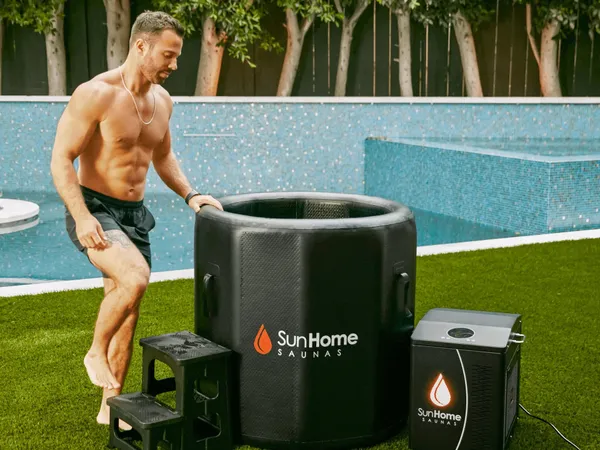
Electrical safety listing and GFCI protection
Plunges with chillers and pumps combine water and mains power. Updated spa and hot-tub safety standards (UL 1563 and CSA C22.2 No. 218.1) now explicitly cover cold plunge tubs, so look for a recognized lab listing and use a GFCI-protected circuit, which CPSC calls the best protection against electrocution.30
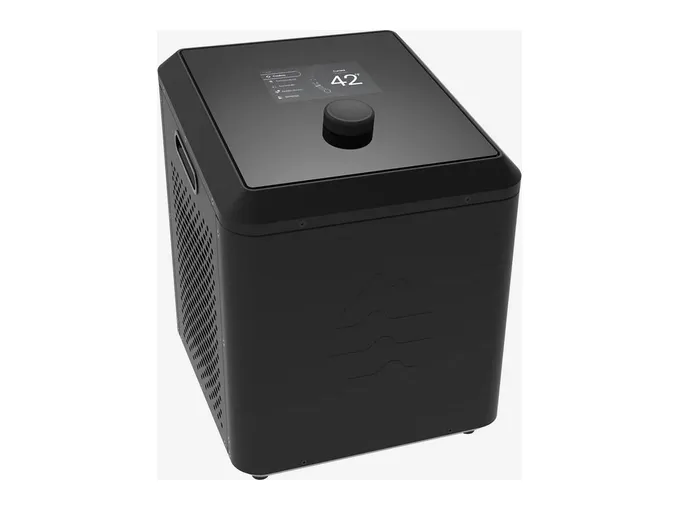
Temperature range and control accuracy
Pooled analyses found the best soreness results at about 10–15 °C (50–59 °F); near-freezing water isn't needed to match studied conditions. A chiller that holds a set temperature accurately matters more than a record-low minimum.
Filtration and sanitation
Chlorine works less efficiently in cold water, so filtration, a sanitizing system and a regular drain-and-refill schedule matter; New Jersey recommends regularly draining and refilling single-user public units (biweekly in its words). Ozone or UV add-ons are common industry features rather than research-tested health factors.31
Locking lid, stable entry and quick exit
Cold shock can impair coordination, so steps or handles that let you get out quickly help, and a locking cover reduces drowning risk for children and pets.31
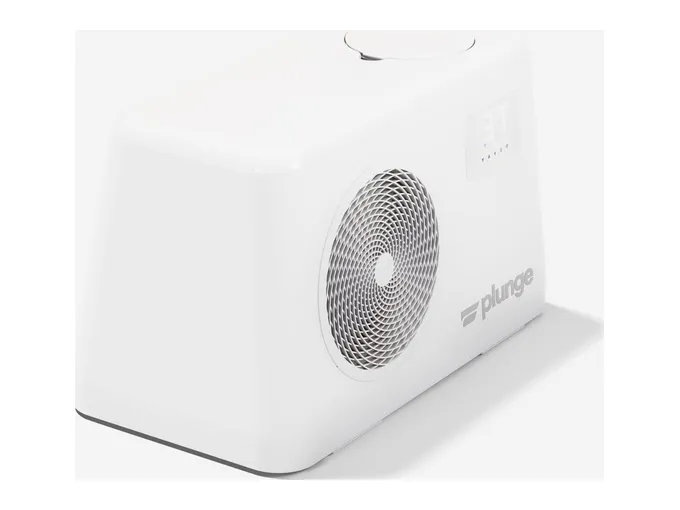
Insulation and chiller capacity
Good insulation and a suitably sized chiller keep temperature stable and cut energy use, especially outdoors in summer.
Cheaper alternatives
The large Dutch trial used 30–90 seconds of cold at the end of an ordinary shower, and many recovery trials used simple cold-water tubs, so an expensive plunge isn't required to approximate studied exposures.
Marketing claims to discount
Claims such as '250% more dopamine,' fat loss or immune boosting stretch small studies; the dopamine figure comes from a full hour at 14 °C measured in blood, and cold has not produced meaningful weight loss in trials.
Compare prices
Cold plunges & cold exposure: current prices
How we make money: some shop links are affiliate links, so ThriveRadar may earn a commission if you buy, at no extra cost to you. It never changes our evidence ratings. Prices are checked daily, not live; confirm the final price at the shop. Learn more.
Long-form interviews and explainers from researchers and clinicians. Their views are their own; check claims against the studies above.
Dr. Rhonda Patrick: Maximizing Healthspan with Exercise, Sauna, & Cold Exposure
FoundMyFitness
Recorded presentation in which Rhonda Patrick reviews the evidence for vigorous exercise, sauna and cold exposure as healthspan tools and gives protocol-level guidance for each.
Using Deliberate Cold Exposure for Health and Performance | Huberman Lab
Andrew Huberman
Huberman covers how deliberate cold exposure affects mood, attention, metabolism and inflammation, with protocols on minimum exposure times, temperatures, time of day and recovery considerations.
How to Use Cold & Heat Exposure to Improve Your Health | Dr. Susanna Søberg
Andrew Huberman
Copenhagen-trained researcher Susanna Søberg discusses how cold and heat exposure influence metabolism, brown fat, insulin sensitivity and neurotransmitters, and how to structure combined protocols.
Cold-Water Immersion and Cryotherapy: Neuroendocrine and Fat Browning Effects
FoundMyFitness
Short explainer on the acute responses to cold-water immersion and whole-body cryotherapy, including the norepinephrine surge, shivering types and brown-fat activation.
Cold therapy: pros, cons, and its impact on longevity [AMA 47 sneak peek]
Peter Attia MD
AMA preview in which Peter Attia reviews studies on cold-water immersion, cryotherapy and cold showers, weighing effects on muscle soreness against possible downsides and the longevity case.
Dr. Andy Galpin: Maximize Recovery to Achieve Fitness & Performance Goals | Huberman Lab
Andrew Huberman
Exercise physiologist Andy Galpin explains soreness and fatigue mechanisms, how to spot overtraining, and where breathwork, heat, cold, movement and pressure-based tools fit into recovery.
A three-hour conversation with cold-exposure researcher Susanna Søberg on the safety and evidence behind ice baths and winter swimming, brown fat, and combining heat with cold.
Mayo Clinic sports medicine specialist Amy Beacom discusses the benefits and safety of alternating sauna and cold-water exposure, including at-home sauna tents and ice baths.
Rhonda Patrick explains cold shock as a hormetic stressor and compares whole-body cryotherapy with cold-water immersion for inflammation, metabolism and athletic recovery.
Australian Institute of Sport recovery physiologist Shona Halson discusses periodizing recovery and the evidence on cold-water immersion, contrast water therapy and other modalities.
Latest research
New studies and news
Collected automatically from PubMed, safety recalls and science news. Not yet reviewed by us; inclusion is not an endorsement.
In pooled recovery analyses, immersions of about 10–15 minutes in water around 10–15 °C gave the best soreness results (an umbrella review also flagged 5–10 °C). The Dutch shower trial used 30–90 seconds of cold at the end of a warm shower. These describe what researchers tested, not a personal prescription.3410
Will a cold plunge after lifting hurt my gains?
It can. In training studies, people who sat in cold water right after resistance sessions gained less muscle size than those who recovered actively or at room temperature, and some analyses also found smaller strength gains. The same problem hasn't been shown for endurance training.5678
Does cold water really boost dopamine by 250%?
That figure comes from a 2000 study in which young men sat in 14 °C water up to the neck for a full hour; blood dopamine rose 250% and noradrenaline 530%. Blood levels don't directly show brain dopamine, and typical plunges last minutes, so the number doesn't carry over to a short dip.9
Can cold exposure help me lose weight?
Cold does activate brown fat and burns some extra energy, but the studies used prolonged mild cold—such as 2 hours a day at 17 °C for six weeks—rather than brief plunges. A 2022 review concluded cold is unlikely to be a sustainable obesity treatment.141516
Are cryotherapy chambers better than an ice bath?
There's less evidence for them. A Cochrane review found only four small, very-low-quality trials and couldn't conclude they reduce soreness, and FDA has said no whole-body cryotherapy device is cleared or approved for treating medical conditions while warning of asphyxiation, frostbite and burns.1829
Who should avoid cold plunges?
People with heart disease, heart-rhythm problems or uncontrolled blood pressure should get medical advice first, because cold shock and 'autonomic conflict' can trigger arrhythmias. People with Raynaud's or cold urticaria face specific risks, and New Jersey's public guidance also flags pregnancy, diabetes, older age and prescription medicines.22252627
Do cold showers count?
They're the best-studied low-cost option: in a 3,018-person Dutch trial, ending daily showers with cold cut self-reported sickness absence from work, though not days of illness. Evidence for broader mood or immune benefits remains limited.1012
Was a cold plunge recalled in March 2026?
The March 26, 2026 CPSC recall from the company DIY Cold Plunge covered its DIY sauna heater kits, a heat-lamp fixture whose wiring could overheat—not a cold plunge. In our searches of CPSC notices through early October 2026 we did not find a recall of a cold-plunge tub or chiller itself.32
Sources
References
FDA consumer update 'Whole Body Cryotherapy (WBC): A "Cool" Trend that Lacks Evidence, Poses Risks' (July 5, 2016; now in FDA's web archive): FDA said not a single whole-body cryotherapy device had been cleared or approved for treating medical conditions, found very little evidence of safety or effectiveness for promoted uses, and listed risks including asphyxiation, hypoxia, frostbite, burns and eye injury. 29
Verification of the 'March 2026 cold-plunge recall': CPSC recall 26-349 (March 26, 2026) was issued by the company DIY Cold Plunge for about 675 DIY Sauna Heater Kits—a heat-lamp fixture for homemade saunas whose conductors can overheat (12 overheating reports, no fires or injuries). It is not a recall of a cold plunge. In our searches of CPSC notices through early October 2026 we did not find a recall of a cold-plunge tub or chiller itself. 32
CPSC (with the American Red Cross) calls ground-fault circuit interrupters the best safety device to prevent electrocution around pools, spas and hot tubs, recommends them on pumps, heaters and nearby circuits, and advises monthly testing. 28
New Jersey Department of Health cold plunge guidance for public facilities (December 22, 2025) applies its hot tub and spa rules to cold plunge pools—supervision, under-16s accompanied, caution signage—and recommends added signs about cold shock, physician consultation before use, and the risks of water colder than 70 °F; it also recommends draining and refilling single-user units biweekly because chlorine works less well in cold water. 26
Cold-water immersion (cryotherapy) for preventing and treating muscle soreness after exercise. Cochrane Database Syst Rev 2012.PubMed 22336838
Impact of Cold-Water Immersion Compared with Passive Recovery Following a Single Bout of Strenuous Exercise on Athletic Performance in Physically Active Participants: A Systematic Review with Meta-analysis and Meta-regression. Sports Med 2022.PubMed 35157264
Can Water Temperature and Immersion Time Influence the Effect of Cold Water Immersion on Muscle Soreness? A Systematic Review and Meta-Analysis. Sports Med 2016.PubMed 26581833
Strategic Application of Post-exercise Cold-Water Immersion to Enhance Performance Recovery and Adaptation: An Umbrella Review of 15 Published Systematic Reviews with Meta-analysis. Sports Med Open 2026.PubMed 42816732
Post-exercise cold water immersion attenuates acute anabolic signalling and long-term adaptations in muscle to strength training. J Physiol 2015.PubMed 26174323
Cold water immersion attenuates anabolic signaling and skeletal muscle fiber hypertrophy, but not strength gain, following whole-body resistance training. J Appl Physiol (1985) 2019.PubMed 31513450
The Effects of Regular Cold-Water Immersion Use on Training-Induced Changes in Strength and Endurance Performance: A Systematic Review with Meta-Analysis. Sports Med 2021.PubMed 33146851
Effects of post-exercise cold-water immersion on resistance training-induced gains in muscular strength: a meta-analysis. Eur J Sport Sci 2023.PubMed 35068365
Human physiological responses to immersion into water of different temperatures. Eur J Appl Physiol 2000.PubMed 10751106
The Effect of Cold Showering on Health and Work: A Randomized Controlled Trial. PLoS One 2016.PubMed 27631616
Cold-water exposure and psychological outcomes in adults: a systematic review and meta-analysis. Front Physiol 2026.PubMed 42819812
Effects of cold-water immersion on health and wellbeing: A systematic review and meta-analysis. PLoS One 2025.PubMed 39879231
Short-Term Head-Out Whole-Body Cold-Water Immersion Facilitates Positive Affect and Increases Interaction between Large-Scale Brain Networks. Biology (Basel) 2023.PubMed 36829490
Cold acclimation recruits human brown fat and increases nonshivering thermogenesis. J Clin Invest 2013.PubMed 23867626
Recruited brown adipose tissue as an antiobesity agent in humans. J Clin Invest 2013.PubMed 23867622
Interventions associated with brown adipose tissue activation and the impact on energy expenditure and weight loss: A systematic review. Front Endocrinol (Lausanne) 2022.PubMed 36568070
Short-term cold acclimation improves insulin sensitivity in patients with type 2 diabetes mellitus. Nat Med 2015.PubMed 26147760
Whole-body cryotherapy (extreme cold air exposure) for preventing and treating muscle soreness after exercise in adults. Cochrane Database Syst Rev 2015.PubMed 26383887
Voluntary activation of the sympathetic nervous system and attenuation of the innate immune response in humans. Proc Natl Acad Sci U S A 2014.PubMed 24799686
Habituation of the cold shock response: A systematic review and meta-analysis. J Therm Biol 2024.PubMed 38211547
The effects of cold exposure (cold water immersion, whole- and partial- body cryostimulation) on cardiovascular and cardiac autonomic control responses in healthy individuals: A systematic review, meta-analysis and meta-regression. J Therm Biol 2024.PubMed 38663342
'Autonomic conflict': a different way to die during cold water immersion?. J Physiol 2012.PubMed 22547634
ECG during helicopter underwater escape training. Aviat Space Environ Med 2010.PubMed 20377144
Cold Water Swimming-Benefits and Risks: A Narrative Review. Int J Environ Res Public Health 2020.PubMed 33276648
Cold Urticaria: From Wheals to Anaphylaxis. Allergy Asthma Immunol Res 2025.PubMed 41044831
New Jersey Department of Health cold plunge guidance for public facilities (December 22, 2025) applies its hot tub and spa rules to cold plunge pools—supervision, under-16s accompanied, caution signage—and recommends added signs about cold shock, physician consultation before use, and the risks of water colder than 70 °F; it also recommends draining and refilling single-user units biweekly because chlorine works less well in cold water. nj.gov
CPSC (with the American Red Cross) calls ground-fault circuit interrupters the best safety device to prevent electrocution around pools, spas and hot tubs, recommends them on pumps, heaters and nearby circuits, and advises monthly testing. cpsc.gov
FDA consumer update 'Whole Body Cryotherapy (WBC): A "Cool" Trend that Lacks Evidence, Poses Risks' (July 5, 2016; now in FDA's web archive): FDA said not a single whole-body cryotherapy device had been cleared or approved for treating medical conditions, found very little evidence of safety or effectiveness for promoted uses, and listed risks including asphyxiation, hypoxia, frostbite, burns and eye injury. wayback.archive-it.org
Verification of the 'March 2026 cold-plunge recall': CPSC recall 26-349 (March 26, 2026) was issued by the company DIY Cold Plunge for about 675 DIY Sauna Heater Kits—a heat-lamp fixture for homemade saunas whose conductors can overheat (12 overheating reports, no fires or injuries). cpsc.gov
The ThriveRadar Weekly
New research, recalls and price drops, once a week.
Plain-English summaries of new studies on heat, cold, light, sleep and more, plus notable price changes from the shops we track. No hype. Unsubscribe anytime.