Red and near-infrared panels, LED masks and bright-light (SAD) lamps: where the evidence is real, and what the specs mean.
Overall evidence: Moderate32 products · 33 key studiesReviewed October 7, 2026Researched with AI assistance · Not reviewed by a clinician · Our method
The verdict
What we know about red light & light therapy
"Light therapy" covers two different things. Red and near-infrared light, also called photobiomodulation, has genuine clinical uses and a lot of hype: evidence is best for a few specific uses and much thinner for full-body "wellness" claims. Bright white light boxes, often called SAD lamps, are a separate technology with good evidence for seasonal depression. This guide covers both, how to read specs like wavelength, irradiance and lux, the eye-safety basics and current prices.
Bottom line · Moderate
Red and near-infrared light has real, dose-dependent effects for a few specific uses—most convincingly regrowing hair in pattern hair loss with laser/LED caps, helmets and combs (some FDA-cleared), and preventing painful mouth sores during some cancer treatments (a clinic therapy). Evidence for skin aging, joint pain and exercise recovery is mixed or early, and the broad full-body 'wellness' claims made for many home panels go well beyond what has been tested. Eye safety deserves real attention, especially for children.
Hair loss (androgenetic alopecia)Moderate
Sham-controlled trials and several meta-analyses show laser/LED combs, caps and helmets increase hair density over 16–26 weeks in men and women with pattern hair loss. Results vary widely between studies and devices, and long-term data are thin.
Skin aging (wrinkles, texture)Early
Small controlled trials report smoother skin, fewer fine wrinkles and more collagen after several weeks of red (around 633 nm) and/or near-infrared (around 830 nm) light. Many results compare people with their own starting point, and trials are short.
Joint and neck pain (mostly clinic lasers)Moderate
Meta-analyses of clinic laser treatment show meaningful pain relief for chronic neck pain and knee osteoarthritis (larger at recommended doses), but another knee meta-analysis found no effect and laser acupuncture failed against sham in a large trial. Home LED panels haven't been shown to deliver equivalent doses.
Muscle performance and recoveryEarly
Light applied before exercise produced a few extra repetitions or seconds to exhaustion in small trials, but certainty is low to very low.
Oral mucositis in cancer care (clinic only)Strong
International supportive-care guidelines recommend specific photobiomodulation protocols to prevent painful mouth sores during stem-cell transplant and head-and-neck radiotherapy, backed by meta-analyses of randomized trials. It is delivered by trained clinicians inside the mouth, not a home use, and one underpowered UK trial found no benefit.
A multicenter randomized trial found that 3-minute sessions with a desktop red-light device, twice a day five days a week, slowed eye growth in children over a year. However, independent lab tests found some of these devices can exceed retinal safety limits, and retinal damage has been reported, so this is a supervised medical treatment, not something to try with consumer lights.
Dry macular degeneration (clinic device)Early
One sham-controlled trial of a clinic multiwavelength system reported modest vision gains and less progression to geographic atrophy over 24 months, and FDA granted the device marketing authorization in November 2024. It is a specialized, clinician-administered treatment.
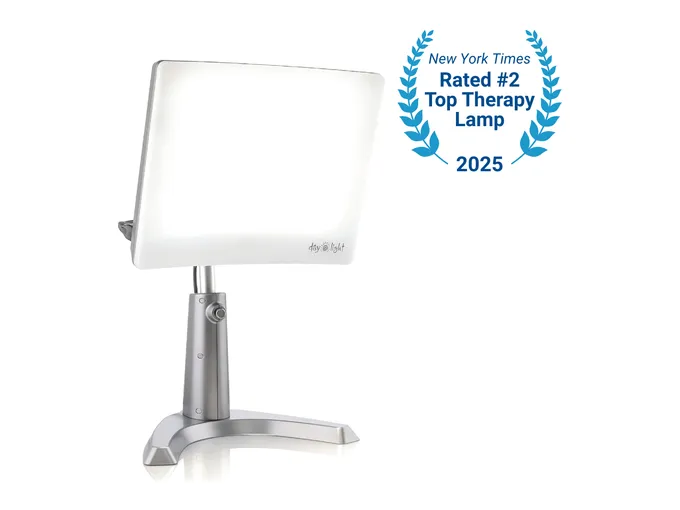
Bright light boxes are a different technology from red-light panels: they shine bright white light toward the eyes. Trials show they ease seasonal (winter) depression and help as an add-on treatment for other depression, though most studies were small.
Evidence
What the research shows
Moderate
Low-level laser and LED devices increase hair density in pattern hair loss.12345Device-specific results over 16–26 weeks with high heterogeneity between studies; how long gains last after stopping is unknown.
Early
Red and near-infrared LED light improves wrinkles and skin texture.678Small, short trials; several report change from baseline rather than versus sham; study devices differ from typical home panels.
Moderate
Clinic laser therapy reduces knee osteoarthritis pain and disability.9101112Meta-analyses conflict: one found no effect, another found benefit that was larger at recommended doses, and the newest rated its positive result very low certainty.
Moderate
Low-level laser therapy reduces chronic neck pain.13Based on a 2009 meta-analysis of 16 small trials using clinic lasers.
Weak
Laser acupuncture relieves chronic knee pain better than sham.14In a 282-person randomized trial, laser acupuncture was no better than sham laser for pain or function.
Early
Light applied before exercise modestly improves muscular endurance.1516Small trials; low or very low certainty; effects amount to a few extra repetitions.
Strong
Photobiomodulation helps prevent oral mucositis during specific cancer treatments.171819Clinician-delivered protocols with set parameters; a UK trial that recruited under a quarter of its target couldn't confirm benefit.
Moderate
Prescription red-light therapy slows myopia progression in children.20Device-specific; one-year main trial; safety questions remain (see safety).
Early
Some red-light myopia devices can damage the retina.21222324Evidence comes from lab measurements and a case report; a 2024 review of 20 studies found no permanent vision loss reported.
Early
Clinic photobiomodulation improves vision in dry age-related macular degeneration.25One pivotal trial of 100 people with modest gains; applies to an FDA-authorized clinic system, not home lights.
Early
Cosmetic red and near-infrared light has not been linked to cancer.2627Based on relatively short clinical trials plus lab and animal studies; long-term human data are limited.
Weak
A stronger or longer light dose works better.28Light therapy often shows a biphasic dose response, where too much light can be less effective than a moderate dose.
Moderate
Bright light boxes are an established treatment for seasonal (winter) depression: across 19 randomized trials, bright light improved depression scores more than dim-light or sham devices.29The trials were small to medium in size and varied in design. They studied people diagnosed with seasonal depression, not everyday winter low mood.
Moderate
Added to usual care, bright light therapy also improved remission and response in people with non-seasonal depression.30This was an add-on to treatment in diagnosed depression, not a test of home lamps for general mood.
Weak
Whether using a light box before winter prevents seasonal depression is unknown; the only eligible trial was too small to say.31
Key studies
The studies behind the ratings
Summaries are our own, from each study's published abstract. Follow the links for the full details.
Controlled trial: random assignment to four treatment groups, compared with a control group · 2014
A controlled trial to determine the efficacy of red and near-infrared light treatment in patient satisfaction, reduction of fine lines, wrinkles, skin roughness, and intradermal collagen density increase
Who:
136 volunteers (113 treated, 23 controls)
What:
Whole-body units delivering 611–650 nm red or 570–850 nm broadband light (about 9 J/cm² in the 611–650 nm range) twice a week for 30 sessions
Found:
Treated groups had better complexion and skin feel, less roughness and higher ultrasound-measured collagen density than controls, confirmed by blinded photo ratings; broadband light was no better than red alone.
Limits:
Unclear from the abstract whether controls were randomized; irradiances and durations varied; specialized full-body units.
A prospective, randomized, placebo-controlled, double-blinded, and split-face clinical study on LED phototherapy for skin rejuvenation: clinical, profilometric, histologic, ultrastructural, and biochemical evaluations and comparison of three different treatment settings
Who:
76 people with facial wrinkles
What:
LED light on half the face—830 nm, 633 nm, both, or sham—twice a week for 4 weeks, with 3 months of follow-up
Found:
Treated groups showed up to 36% less wrinkling and up to 19% more skin elasticity than at baseline, with more collagen and elastic fibers on biopsy; no adverse effects.
Limits:
Main changes reported against baseline rather than as between-group differences; short treatment.
Systematic review and meta-analysis of 31 studies · 2023
Utilization of light-emitting diodes for skin therapy: Systematic review and meta-analysis
Who:
People treated with LEDs for skin conditions
What:
Red, blue, yellow and near-infrared LED light
Found:
Red and blue LEDs reduced acne (SMD −2.42); near-infrared and other LEDs showed consistent benefit for skin rejuvenation, herpes simplex and psoriasis; wound-healing and eczema results were inconsistent.
Limits:
Mixed devices and outcomes; possible publication bias.
Systematic review of 37 clinical trials (19 randomized) · 2022
Home-based devices in dermatology: a systematic review of safety and efficacy
Who:
People using home dermatology devices
What:
Home intense pulsed light, laser diodes, radiofrequency, LEDs and UVB
Found:
The authors supported home laser diodes for androgenetic alopecia and LEDs for acne; devices generally had favorable safety profiles with few serious adverse events.
Four multicenter randomized, double-blind, sham-device-controlled trials · 2014
Efficacy and safety of a low-level laser device in the treatment of male and female pattern hair loss: a multicenter, randomized, sham device-controlled, double-blind study
Who:
269 randomized men and women with pattern hair loss (128 men, 141 women); 225 analyzed
What:
FDA-cleared laser comb (7-, 9- or 12-beam) or a sham device used on the whole scalp three times a week for 26 weeks
Found:
Terminal hair density rose by 18.4–25.7 hairs/cm² with active devices vs 1.6–9.4 with sham across the trials (all statistically significant); no serious adverse events.
Limits:
Device-specific; 26 weeks only; 44 participants lost to follow-up.
The growth of human scalp hair mediated by visible red light laser and LED sources in males
Who:
44 men aged 18–48 with androgenetic alopecia (41 completed)
What:
Home helmet with 655 nm lasers and LEDs vs an identical-looking placebo with incandescent red lights, every other day for 16 weeks (60 treatments of 25 minutes; 67.3 J/cm² per treatment)
Found:
Hair counts increased 39% more with the active device than with placebo (P = 0.001); no adverse events.
Systematic review and meta-analysis of 22 randomized placebo-controlled trials · 2019
Efficacy of low-level laser therapy on pain and disability in knee osteoarthritis: systematic review and meta-analysis of randomised placebo-controlled trials
Who:
1,063 people with knee osteoarthritis
What:
Low-level laser therapy to the knee, analyzed by dose
Found:
Pain fell 14.23 mm more than placebo on a 100-mm scale at the end of therapy; with recommended doses the difference was 18.71 mm and peaked at 31.87 mm 2–4 weeks after treatment. Disability also improved. Effective doses: 4–8 J per spot at 785–860 nm and 1–3 J per spot at 904 nm.
Limits:
Clinic lasers at specific doses; the authors noted laser therapy isn't recommended in major osteoarthritis guidelines.
Systematic review and meta-analysis of 9 randomized trials · 2015
Effectiveness of low-level laser therapy in patients with knee osteoarthritis: a systematic review and meta-analysis
Who:
518 patients with knee osteoarthritis
What:
Low-level laser therapy (at least 8 sessions) vs sham laser
Found:
No significant difference in pain right after therapy (SMD −0.28, 95% CI −0.66 to 0.10) or 12 weeks later, and no benefit on WOMAC pain, stiffness or function, including in trials following recommended doses.
Limits:
English-language trials from 2000–2014 only; fewer trials than later reviews.
Randomized clinical trial (Zelen design), four arms · 2014
Acupuncture for chronic knee pain: a randomized clinical trial
Who:
282 community volunteers aged 50 or older with chronic knee pain in Victoria, Australia
What:
Needle, laser or sham-laser acupuncture for 12 weeks, or no acupuncture
Found:
Neither laser nor needle acupuncture beat sham for pain or function at 12 weeks (laser vs sham pain difference −0.1 on a 0–10 scale); modest pain benefits vs no treatment at 12 weeks were gone at 1 year.
Limits:
Tests laser acupuncture at acupuncture points, not broad-area light therapy.
Systematic review and meta-analysis of 16 randomized trials · 2009
Efficacy of low-level laser therapy in the management of neck pain: a systematic review and meta-analysis of randomised placebo or active-treatment controlled trials
Who:
820 patients with acute or chronic neck pain
What:
Low-level laser therapy vs placebo or active treatment
Found:
In chronic neck pain, pain fell by 19.86 mm on a 100-mm scale (11 trials), and relief persisted 1–22 weeks after treatment (22.07 mm); side effects were mild and similar to placebo.
Limits:
Varied lasers and doses; small trials; clinic treatment.
Systematic review with meta-analysis (13 acceptable-quality randomized trials) · 2015
Effect of phototherapy (low-level laser therapy and light-emitting diode therapy) on exercise performance and markers of exercise recovery: a systematic review with meta-analysis
Who:
Healthy people doing exercise tests
What:
Laser or LED phototherapy, mostly applied before exercise
Found:
Phototherapy added 5.47 repetitions and 4.12 seconds to exhaustion compared with placebo; the most consistent results came with red or infrared light before exercise at 50–200 mW and 5–6 J per spot.
Limits:
Small trials; biochemical markers couldn't be pooled.
Systematic review and meta-analysis of 12 randomized trials · 2025
A systematic review and meta-analysis of the acute effects of photobiomodulation therapy on the maximum number of repetitions in resistance exercise in young adults
Who:
346 healthy young adults
What:
Photobiomodulation (laser or LED) vs placebo before resistance exercise
Found:
About 3.87 more repetitions than placebo overall; larger benefit in upper-body than lower-body muscles; significant in men but not women. Certainty was low or very low.
Systematic review and clinical practice guideline (MASCC/ISOO) · 2019
Systematic review of photobiomodulation for the management of oral mucositis in cancer patients and clinical practice guidelines
Who:
Cancer patients at risk of oral mucositis
What:
Photobiomodulation (laser and other light) protocols
Found:
Recommends photobiomodulation to prevent oral mucositis and related pain in hematopoietic stem-cell transplantation and head-and-neck radiotherapy with or without chemotherapy, using specific protocols; no guideline possible for treating established mucositis or chemotherapy-related mucositis.
Limits:
Clinical settings varied widely; recommendations tied to specific parameters.
Systematic review and meta-analysis of 14 randomized trials · 2024
Efficacy of photobiomodulation therapy in the management of oral mucositis in patients with head and neck cancer: A systematic review and meta-analysis of randomized controlled trials
Who:
869 patients with head and neck cancer receiving chemoradiotherapy
What:
Photobiomodulation therapy vs control
Found:
Fewer cases of oral mucositis from week 2 (RR 0.49) through week 7 (RR 0.77), less severe mucositis (RR 0.45 at the end of treatment) and less pain (weighted mean difference −1.09).
Effect of Repeated Low-Level Red-Light Therapy for Myopia Control in Children: A Multicenter Randomized Controlled Trial
Who:
264 children aged 8–13 with myopia; 246 analyzed
What:
Desktop 650 nm red-light device (about 1,600 lux; 0.29 mW through a 4-mm pupil) for 3 minutes twice daily, 5 days a week, plus single-vision glasses, vs glasses only
Found:
Eye (axial) growth was 0.13 mm vs 0.38 mm and myopia progression −0.20 D vs −0.79 D over 12 months; no severe adverse events or structural damage on OCT scans.
Retinal Damage After Repeated Low-level Red-Light Laser Exposure
Who:
A 12-year-old girl with moderate myopia
What:
A repeated low-level red-light laser device used for 5 months
Found:
Vision fell from 20/20 to 20/30 in both eyes with damage to the outer retina at the center of vision; after stopping, the damage partly recovered within 3 months and vision improved to 20/25 (details from the full text).
Red light instruments for myopia exceed safety limits
Who:
Two commercial red-light myopia devices
What:
Optical power and retinal irradiance measured following ANSI Z136.1-2014
Found:
Both were Class 1 laser products, yet 3 minutes of continuous viewing approached or exceeded the maximum permissible exposure for photochemical and/or thermal retinal damage.
Limits:
Two devices; modeling assumptions about pupil size and viewing.
Radiometric and safety assessment of a 'low-level red-light' myopia control device
Who:
One red-light myopia control device (655 nm)
What:
Beam measurements compared against ANSI Z80.36-2021 limits
Found:
Retinal exposure exceeded thermal limits for pupils wider than 1 mm and photochemical limits for pupils wider than 5 mm; the time to a potential photochemical hazard was under 100 seconds for larger pupils.
Safety of repeated low-level red-light therapy for myopia: A systematic review
Who:
2,380 participants aged 3–18 (1,436 treated with red light)
What:
Repeated low-level red-light therapy for myopia (median 9 months, up to 24 months)
Found:
No permanent vision loss was reported; temporary afterimages were the most common symptom; side effects occurred at 0.088 per 100 patient-years. The authors advised retinal imaging before and during treatment.
Limits:
Short follow-up; side effects may be under-reported.
LONG-TERM EFFICACY AND SAFETY OF PHOTOBIOMODULATION IN DRY AGE-RELATED MACULAR DEGENERATION (LIGHTSITE III: 24-MONTH ANALYSIS)
Who:
100 people (148 eyes) with dry age-related macular degeneration
What:
Clinic multiwavelength photobiomodulation (590, 660 and 850 nm) with the Valeda system: 9 treatments over 3–5 weeks, repeated every 4 months, vs sham
Found:
Met its vision endpoint at month 21 (P = 0.0036) with a +6.2-letter gain after treatment; progression to geographic atrophy was 6.8% vs 24.0% with sham at 24 months; no signs of phototoxicity.
Limits:
Single trial; modest sample; clinic device, not home use.
Umbrella review of 15 meta-analyses (204 randomized trials, over 9,000 participants) · 2025
Effects of photobiomodulation on multiple health outcomes: an umbrella review of randomized clinical trials
Who:
People with a range of conditions
What:
Photobiomodulation
Found:
Significant effects for 12 of 35 outcomes; moderate-certainty evidence for burning mouth syndrome pain, knee osteoarthritis disability, fibromyalgia fatigue, androgenetic alopecia hair density and cognitive function; most other outcomes low or very low certainty.
Limits:
Depends on underlying meta-analyses; possible publication bias.
Systematic review plus Delphi expert consensus (21 panelists) · 2025
Evidence-based consensus on the clinical application of photobiomodulation
Who:
Published photobiomodulation research
What:
Photobiomodulation in medical and aesthetic uses
Found:
The panel concluded photobiomodulation is safe for adults, red-light treatment does not induce DNA damage, and it is effective for peripheral neuropathy, androgenic alopecia, several kinds of wound ulcers, diabetic-foot-ulcer pain and acute radiation dermatitis.
Limits:
Expert consensus; panel selected by publication history.
Systematic review of clinical and preclinical evidence · 2023
Photobiomodulation: A Systematic Review of the Oncologic Safety of Low-Level Light Therapy for Aesthetic Skin Rejuvenation
Who:
Skin-rejuvenation trials plus cell and animal tumor studies
What:
Red and near-infrared photobiomodulation for skin rejuvenation
Found:
No clinical trial data linked photobiomodulation with new or recurrent cancer, and lab studies showed no clear cancer-promoting pattern; the authors judged it oncologically safe for skin rejuvenation.
Limits:
Animal and lab results were mixed; long-term human data limited.
Optical radiation and the eyes with special emphasis on children
Who:
Children's eyes and optical radiation
What:
Sunlight, visible lasers and near-infrared radiation
Found:
Advises protecting children's eyes in high-irradiance environments, notes some data suggesting near-infrared may cause cumulative damage to the lens, and calls for more research on near-infrared hazards.
Meta-analysis of 19 randomized controlled trials · 2020
The Efficacy of Light Therapy in the Treatment of Seasonal Affective Disorder: A Meta-Analysis of Randomized Controlled Trials
Who:
Adults with seasonal affective disorder (610 patients in the depression-score analysis)
What:
Bright light therapy (at least 1,000 lux, light box or visor) compared with dim light or sham devices
Found:
Bright light improved depression scores more than placebo (standardized mean difference −0.37) and made a treatment response more likely (risk ratio 1.42).
Limits:
Trials were methodologically varied with small-to-medium samples and moderate-to-high risk of bias; the authors call for larger, high-quality trials.
Light therapy for preventing seasonal affective disorder
Who:
46 adults with a history of winter depression who were well at the start
What:
Preventive bright white light (2,500 lux visors), infrared light, or no light treatment
Found:
Fewer people developed winter depression with bright light (43%) than with no light (67%), but the estimate was very imprecise (risk ratio 0.64, 95% CI 0.30 to 1.38) and the evidence very low quality.
Limits:
A single small, unblinded study; the reviewers could not draw conclusions about prevention.
Systematic review and meta-analysis of 7 randomized trials · 2020
Light Therapy for Patients With Bipolar Depression: Systematic Review and Meta-Analysis of Randomized Controlled Trials
Who:
259 patients with bipolar depression
What:
Light therapy added to treatment, compared with placebo light
Found:
Depression scores improved (standardized mean difference 0.43) and response was more likely (odds ratio 2.32); switches into mania or hypomania were not more common than with placebo (odds ratio 1.30).
Limits:
Small, short trials with differing light settings; remission did not differ significantly.
Protect your eyes: don't look directly into red or near-infrared LEDs or lasers, and wear goggles rated for the device. Near-infrared light is largely invisible, so brightness gives little warning, and some data suggest it may cause cumulative lens damage.223234
Children's eyes: red-light myopia treatment is a prescription therapy. Independent lab tests found some devices can exceed retinal safety limits within minutes, and a 12-year-old developed retinal damage after five months of use that only partly recovered within three months of stopping. Keep consumer panels away from children's eyes.212223
Researchers reviewing red-light myopia therapy recommend retinal imaging before and during treatment and watching for prolonged afterimages or vision changes.24
Burns: FDA does not treat laser products for skin rejuvenation as low risk because lasers can burn skin and eyes; follow the device's distance and time limits.34
Cancer history: clinical studies haven't linked red or near-infrared skin treatments with new or recurrent cancer, but long-term data are limited, so check with your oncologist first.2627
More isn't better: light therapy often shows a biphasic dose response, so going beyond a device's recommended session time may reduce rather than increase benefit.28
Seasonal depression is a medical condition: talk to a clinician before using a light box to treat it, especially if you have bipolar disorder. In small trials of bipolar depression, light therapy added to treatment helped and did not increase switches into mania, but it was used under medical care.33
This is general information, not medical advice. If you have a heart condition, are pregnant, take medication or have any health concern, ask a clinician first.
Buying guide
Specs that actually matter
Wavelengths: stated peaks and a measured spectrum
Positive trials mostly used red light around 630–660 nm and/or near-infrared around 785–860 nm (some lasers at 904 nm). Look for stated peak wavelengths backed by a measured spectrum; extra colors haven't been shown to help, and one trial found broadband light no better than red alone.
Irradiance at a stated distance (mW/cm²)
Studies specify power density and dose: dose (J/cm²) = irradiance (W/cm²) × seconds, so 50 mW/cm² for 60 seconds gives 3 J/cm², as in one cancer-care trial. Because light weakens with distance, a figure measured at the panel surface overstates what reaches you at your usual distance; ask how and with what calibrated meter it was measured.
Dose guidance in the instructions
Effects follow a biphasic curve—too little does nothing and too much can do less—so instructions should give a dose or session time tied to a specific goal; knee studies, for example, found benefit at 4–8 J per spot (785–860 nm).
Device type matched to the goal
Hair evidence comes from combs, caps and helmets used on the scalp; skin trials used face or full-body units; pain trials mostly used clinic lasers on specific spots. A large panel isn't automatically equivalent to the device that was tested.
FDA status: cleared vs registered vs wellness
'Cleared' means a 510(k) for a specific use (for example product codes OAP for hair growth, OHS for over-the-counter wrinkle reduction, NHN for adjunctive pain relief). 'Registered' is only a listing, and wellness-only products may have had no FDA review at all. Ask for the 510(k) number and check what it covers.35
Eye protection included
Good kits include goggles suited to the device's wavelengths, which matters most for near-infrared light you can barely see.
Heat output
Photobiomodulation is meant to be non-thermal; a device that makes skin hot is adding heat, not necessarily benefit, and FDA flags burn risk for lasers.
Flicker
'Flicker-free' describes how the LED driver is built. It may matter for comfort, but none of the studies reviewed here tied flicker to treatment results, so treat it as a comfort feature.
EMF claims
'Low-EMF' or 'zero-EMF' panels are a marketing point; none of the studies reviewed measured EMF or linked it to outcomes, so it shouldn't outweigh verified wavelength and irradiance data or safety certification.
Brightness at a stated distance (SAD lamps)
Light boxes for seasonal depression are rated in lux, not wavelength. Trials used bright white light of at least 1,000 lux, and lamps sold for this purpose are usually rated at 10,000 lux at a specific distance; the rating only holds at that distance, so check it before you buy.29
Compare prices
Red light & light therapy: current prices
How we make money: some shop links are affiliate links, so ThriveRadar may earn a commission if you buy, at no extra cost to you. It never changes our evidence ratings. Prices are checked daily, not live; confirm the final price at the shop. Learn more.
Long-form interviews and explainers from researchers and clinicians. Their views are their own; check claims against the studies above.
Using Light (Sunlight, Blue Light & Red Light) to Optimize Health
Andrew Huberman
Huberman explains how different wavelengths affect sleep, alertness, mood and hormones, and discusses UV and red/near-infrared phototherapies for skin, pain and age-related vision decline.
Dr. Glen Jeffery: Using Red Light to Improve Your Health & the Harmful Effects of LEDs
Andrew Huberman
UCL neuroscientist Glen Jeffery describes his research on red and near-infrared light and mitochondrial function, including effects on eyesight and blood glucose, and his concerns about LED-dominated lighting.
Nature's video team examines the claims around red and near-infrared light therapy, from neurological research to consumer face masks, and asks photobiomodulation researchers what the evidence supports.
Primary-care physician Brad Stanfield revisits the trial evidence on at-home red-light (LED) face masks for skin aging and explains why he changed his earlier take.
Stanford psychiatrist Erin Cassidy-Eagle's public lecture on sleep, aging and longevity: how sleep changes with age, why too little or too much is a problem, how light shapes circadian rhythms, and which popular trends hold up.
Peter Attia grades the evidence for red light therapy across skin, hair, eyes, pain, exercise and metabolic uses and ends with a summary table; the public feed carries a preview, with the full episode for members.
Audio version of Huberman's interview with UCL vision scientist Glen Jeffery on long-wavelength light, mitochondria, eyesight and blood glucose, and concerns about LED-dominated lighting.
Matt Walker explains why morning outdoor light anchors the circadian clock and why evening room lighting, more than phone screens, can suppress melatonin, with a no-cost light routine.
Latest research
New studies and news
Collected automatically from PubMed, safety recalls and science news. Not yet reviewed by us; inclusion is not an endorsement.
Possibly, modestly. Small controlled trials found smoother skin, fewer fine lines and more collagen after several weeks of red and near-infrared LED treatment, but many results compare people with their own starting point and the trials were short. Subtle changes are the most the evidence supports.678
Can it regrow hair?
For pattern hair loss, this is the best-supported home use. Sham-controlled trials of laser combs and helmets found more hairs per square centimeter after 16–26 weeks, and meta-analyses agree, though results vary by device and study. Minoxidil and finasteride are other effective options to discuss with a dermatologist.1234
Will a red light panel help my knee arthritis?
Clinic laser studies are mixed: one large meta-analysis found pain relief, especially at recommended doses, an earlier one found no effect, and the newest rated its positive finding very low certainty. Home panels haven't been tested the same way, so consider them unproven for knee pain.91011
What does 'FDA-cleared' mean on a light device?
A 510(k) clearance means FDA found the device substantially equivalent to a legally marketed device for a specific use, such as hair growth, over-the-counter wrinkle reduction or adjunctive pain relief. 'FDA registered' only means the company is listed with FDA and does not denote approval, and many panels sold for 'wellness' have had no FDA review.343637
Is red light therapy safe for my eyes?
Don't stare into the LEDs, and use the goggles. Lab tests found some red-light devices sold to slow children's myopia can exceed retinal safety limits within minutes, and a case of retinal damage has been reported. Near-infrared light is barely visible, so brightness is a poor guide to risk.212232
Can red light therapy cause cancer?
Current evidence hasn't linked red or near-infrared light used for skin rejuvenation with new or recurrent cancer, and an expert panel concluded red-light treatment doesn't damage DNA. Long-term human data are limited, so people with a cancer history should ask their oncologist first.2627
Does timing around workouts matter?
In the studies, most benefits appeared when light was applied before exercise, adding a few repetitions or seconds to exhaustion. The evidence is low certainty, so any effect is likely small.1516
Is light therapy used in hospitals?
Yes, for specific purposes. Cancer-care guidelines recommend set photobiomodulation protocols to prevent mouth sores during stem-cell transplants and head-and-neck radiotherapy, and in 2024 FDA authorized a clinic light system for dry age-related macular degeneration. These use controlled doses delivered by trained staff.172538
Is a SAD lamp the same as a red light panel?
No. A SAD lamp (light box) gives off bright white light that reaches your eyes, and it has good evidence for seasonal depression. Red and near-infrared panels shine longer wavelengths onto skin, with evidence mainly for hair loss and a few clinic uses. They are not interchangeable.29
Sources
References
FDA describes a 510(k) as a premarket submission showing a device is as safe and effective as—substantially equivalent to—a legally marketed device; a device found substantially equivalent is 'cleared' for its stated use. Clearance is specific to the device and its intended use. 36
Under 21 CFR 807.39, establishment registration or a registration number does not denote FDA approval, and suggesting otherwise is misbranding. 'FDA registered' is a listing, not a review of whether a light device works. 37
Hair-growth lasers: FDA product code OAP ('laser comb hair growth stimulator'), Class II under 21 CFR 890.5500, reviewed through 510(k); the code's definition covers promoting hair growth in males with androgenic alopecia, Norwood-Hamilton IIa to V. 39
Wrinkle devices: FDA product code OHS ('light based over the counter wrinkle reduction'), Class II under 21 CFR 878.4810, reviewed through 510(k). 40
Pain devices: FDA product code NHN covers non-thermal laser instruments for adjunctive use in pain therapy, Class II under 21 CFR 890.5500, reviewed through 510(k). 41
FDA's General Wellness guidance (issued January 6, 2026) says CDRH does not intend to examine low-risk wellness products, that coverage under the policy does not establish safety or effectiveness, and that a laser product claiming skin rejuvenation is not low risk because lasers can burn skin and eyes. 34
FDA granted De Novo request DEN230083 on November 4, 2024 for LumiThera's Valeda Light Delivery System, creating regulation 21 CFR 886.5520 and product code SDE ('light based device for dry age-related macular degeneration'). This is a clinic device, not a consumer red-light panel. 38
Efficacy and safety of a low-level laser device in the treatment of male and female pattern hair loss: a multicenter, randomized, sham device-controlled, double-blind study. Am J Clin Dermatol 2014.PubMed 24474647
The growth of human scalp hair mediated by visible red light laser and LED sources in males. Lasers Surg Med 2013.PubMed 24078483
The effectiveness of treatments for androgenetic alopecia: A systematic review and meta-analysis. J Am Acad Dermatol 2017.PubMed 28396101
Low-Level Laser and LED Therapy in Alopecia: A Systematic Review and Meta-Analysis. Dermatol Surg 2025.PubMed 39404126
Home-based devices in dermatology: a systematic review of safety and efficacy. Arch Dermatol Res 2022.PubMed 33938981
A prospective, randomized, placebo-controlled, double-blinded, and split-face clinical study on LED phototherapy for skin rejuvenation: clinical, profilometric, histologic, ultrastructural, and biochemical evaluations and comparison of three different treatment settings. J Photochem Photobiol B 2007.PubMed 17566756
A controlled trial to determine the efficacy of red and near-infrared light treatment in patient satisfaction, reduction of fine lines, wrinkles, skin roughness, and intradermal collagen density increase. Photomed Laser Surg 2014.PubMed 24286286
Utilization of light-emitting diodes for skin therapy: Systematic review and meta-analysis. Photodermatol Photoimmunol Photomed 2023.PubMed 36310510
Efficacy of low-level laser therapy on pain and disability in knee osteoarthritis: systematic review and meta-analysis of randomised placebo-controlled trials. BMJ Open 2019.PubMed 31662383
Effectiveness of low-level laser therapy in patients with knee osteoarthritis: a systematic review and meta-analysis. Osteoarthritis Cartilage 2015.PubMed 25914044
Effectiveness of Photobiomodulation in Reducing Pain and Disability in Patients With Knee Osteoarthritis: A Systematic Review With Meta-Analysis. Phys Ther 2024.PubMed 38775202
Effects of photobiomodulation on multiple health outcomes: an umbrella review of randomized clinical trials. Syst Rev 2025.PubMed 40770824
Efficacy of low-level laser therapy in the management of neck pain: a systematic review and meta-analysis of randomised placebo or active-treatment controlled trials. Lancet 2009.PubMed 19913903
Acupuncture for chronic knee pain: a randomized clinical trial. JAMA 2014.PubMed 25268438
Effect of phototherapy (low-level laser therapy and light-emitting diode therapy) on exercise performance and markers of exercise recovery: a systematic review with meta-analysis. Lasers Med Sci 2015.PubMed 24249354
A systematic review and meta-analysis of the acute effects of photobiomodulation therapy on the maximum number of repetitions in resistance exercise in young adults. Lasers Med Sci 2025.PubMed 40205065
Systematic review of photobiomodulation for the management of oral mucositis in cancer patients and clinical practice guidelines. Support Care Cancer 2019.PubMed 31286228
Efficacy of photobiomodulation therapy in the management of oral mucositis in patients with head and neck cancer: A systematic review and meta-analysis of randomized controlled trials. Head Neck 2024.PubMed 38265122
Photobiomodulation in the management of oral mucositis for adult head and neck cancer patients receiving irradiation: the LiTEFORM RCT. Health Technol Assess 2022.PubMed 36484364
Effect of Repeated Low-Level Red-Light Therapy for Myopia Control in Children: A Multicenter Randomized Controlled Trial. Ophthalmology 2022.PubMed 34863776
Red light instruments for myopia exceed safety limits. Ophthalmic Physiol Opt 2024.PubMed 38180093
Radiometric and safety assessment of a 'low-level red-light' myopia control device. Ophthalmic Physiol Opt 2025.PubMed 40905918
Safety of repeated low-level red-light therapy for myopia: A systematic review. Asia Pac J Ophthalmol (Phila) 2024.PubMed 39672511
LONG-TERM EFFICACY AND SAFETY OF PHOTOBIOMODULATION IN DRY AGE-RELATED MACULAR DEGENERATION (LIGHTSITE III: 24-MONTH ANALYSIS). Retina 2026.PubMed 41791029
Photobiomodulation: A Systematic Review of the Oncologic Safety of Low-Level Light Therapy for Aesthetic Skin Rejuvenation. Aesthet Surg J 2023.PubMed 36722207
Evidence-based consensus on the clinical application of photobiomodulation. J Am Acad Dermatol 2025.PubMed 40253006
The Efficacy of Light Therapy in the Treatment of Seasonal Affective Disorder: A Meta-Analysis of Randomized Controlled Trials. Psychother Psychosom 2020.PubMed 31574513
Bright Light Therapy for Nonseasonal Depressive Disorders: A Systematic Review and Meta-Analysis. JAMA Psychiatry 2025.PubMed 39356500
Optical radiation and the eyes with special emphasis on children. Prog Biophys Mol Biol 2011.PubMed 21946042
Light Therapy for Patients With Bipolar Depression: Systematic Review and Meta-Analysis of Randomized Controlled Trials. Can J Psychiatry 2020.PubMed 31826657
FDA's General Wellness guidance (issued January 6, 2026) says CDRH does not intend to examine low-risk wellness products, that coverage under the policy does not establish safety or effectiveness, and that a laser product claiming skin rejuvenation is not low risk because lasers can burn skin and eyes. fda.gov
FDA describes a 510(k) as a premarket submission showing a device is as safe and effective as—substantially equivalent to—a legally marketed device; a device found substantially equivalent is 'cleared' for its stated use. fda.gov
Under 21 CFR 807.39, establishment registration or a registration number does not denote FDA approval, and suggesting otherwise is misbranding. govinfo.gov
FDA granted De Novo request DEN230083 on November 4, 2024 for LumiThera's Valeda Light Delivery System, creating regulation 21 CFR 886.5520 and product code SDE ('light based device for dry age-related macular degeneration'). accessdata.fda.gov
Hair-growth lasers: FDA product code OAP ('laser comb hair growth stimulator'), Class II under 21 CFR 890.5500, reviewed through 510(k); the code's definition covers promoting hair growth in males with androgenic alopecia, Norwood-Hamilton IIa to V. accessdata.fda.gov
Wrinkle devices: FDA product code OHS ('light based over the counter wrinkle reduction'), Class II under 21 CFR 878.4810, reviewed through 510(k). accessdata.fda.gov
Pain devices: FDA product code NHN covers non-thermal laser instruments for adjunctive use in pain therapy, Class II under 21 CFR 890.5500, reviewed through 510(k). accessdata.fda.gov
The ThriveRadar Weekly
New research, recalls and price drops, once a week.
Plain-English summaries of new studies on heat, cold, light, sleep and more, plus notable price changes from the shops we track. No hype. Unsubscribe anytime.